
HISTORY & MEMORY · NOVEMBER 10, 2026

Cathay Williams: The Soldier Who Enlisted as William Cathay

The record of one soldier makes visible both the determination to serve and the limits placed around who could be recognized as a soldier.

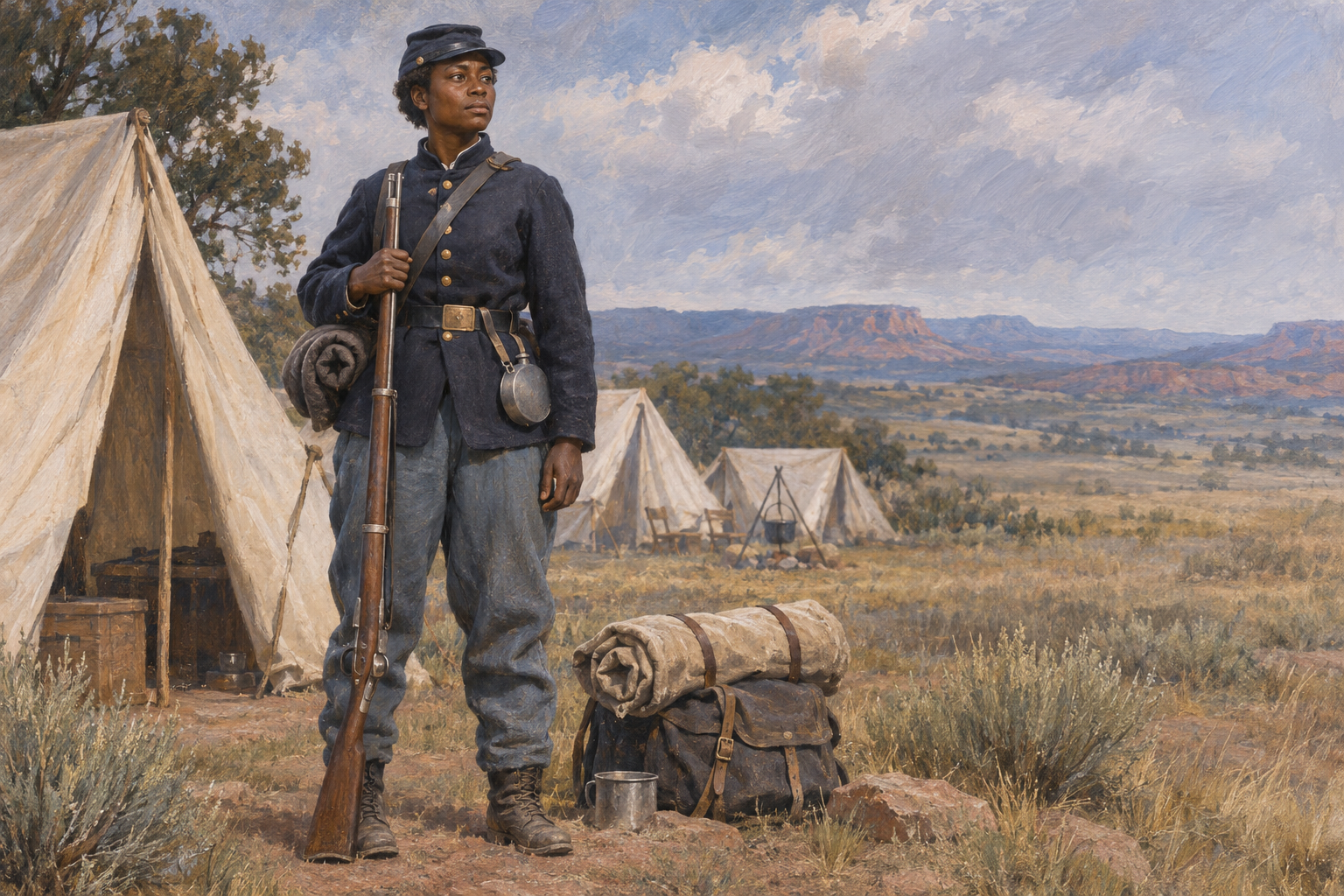
Editorial illustration of Cathay Williams in the uniform of a nineteenth-century U.S. soldier.
Generated editorial illustration for VHVATC’s history series. It is not an archival photograph or historical artifact.

Cathay Williams entered the Army under a name that concealed her gender. The surviving record asks readers to notice the service before deciding what the record should have made possible.

A name on the enlistment paper

The U.S. Army identifies Cathay Williams as the first documented African-American woman to enlist in the Army. She enlisted in 1866 under the pseudonym William Cathay.

The choice of name was not a small detail. It was the condition that made enlistment possible in a military system that did not recognize women as soldiers in the way it recognized men. Her service entered the official record through a disguise the institution required.

Service in a male uniform

The Army’s account describes Williams as the only documented woman to serve while posing as a man. She remained in the Army until receiving a medical discharge in 1868.

Those two years are easy to flatten into a headline. They deserve a fuller reading: Williams made a choice to enlist, carried the obligations of military service, and left a record that complicates the boundaries later histories placed around the word soldier.

What the record makes visible

Historical documents from the period do not answer every question about Williams’s life. They do establish the central fact that a Black woman entered the Army under a male name and served long enough to receive a medical discharge.

That limited record is still powerful. It widens the history of Black military service beyond the categories institutions were prepared to recognize at the time.

THEN · NOW · JOIN

Honor the record. Make the next step clearer.

This history stands on its own. The present-day work also deserves clear evidence, plain language, and a defined invitation.

THENThe historical record

Williams’s enlistment shows how a person could enter military service while the institution withheld a public identity that matched the person serving.

NOWVHVATC Today

VHVATC’s current public pages describe support for Veterans, families, and communities. The present-day routes are offered as current service paths, not as proof of a historical outcome.

JOINA reader’s choice

Use the Army source to learn more, bring this story into classrooms and community conversations, and connect with VHVATC about current support or partnership.

SEE THE WORK BEFORE YOU FUND THE MISSION

Evidence should come before the ask.

NEED

The historical need was the ability to serve and be recognized without having to conceal identity.

WHAT THE RECORD SHOWS

The Army identifies Williams’s 1866 enlistment under William Cathay and her 1868 medical discharge.

WHERE & WHEN

The documented service occurred in the U.S. Army from 1866 to 1868.

EVIDENCE AVAILABLE

The official Army history page is linked directly and the article avoids claims beyond that record.

WHAT SUPPORT COULD MAKE POSSIBLE NEXT

Readers can help keep overlooked service histories visible by sharing them, teaching them, and supporting organizations that help Veterans today.