
HISTORY & MEMORY · NOVEMBER 10, 2026

Christian Fleetwood: Courage Recognized, Opportunity Denied

His service did not end with the medal. Fleetwood kept seeking the authority to lead—and left a record of how race shaped that opportunity.

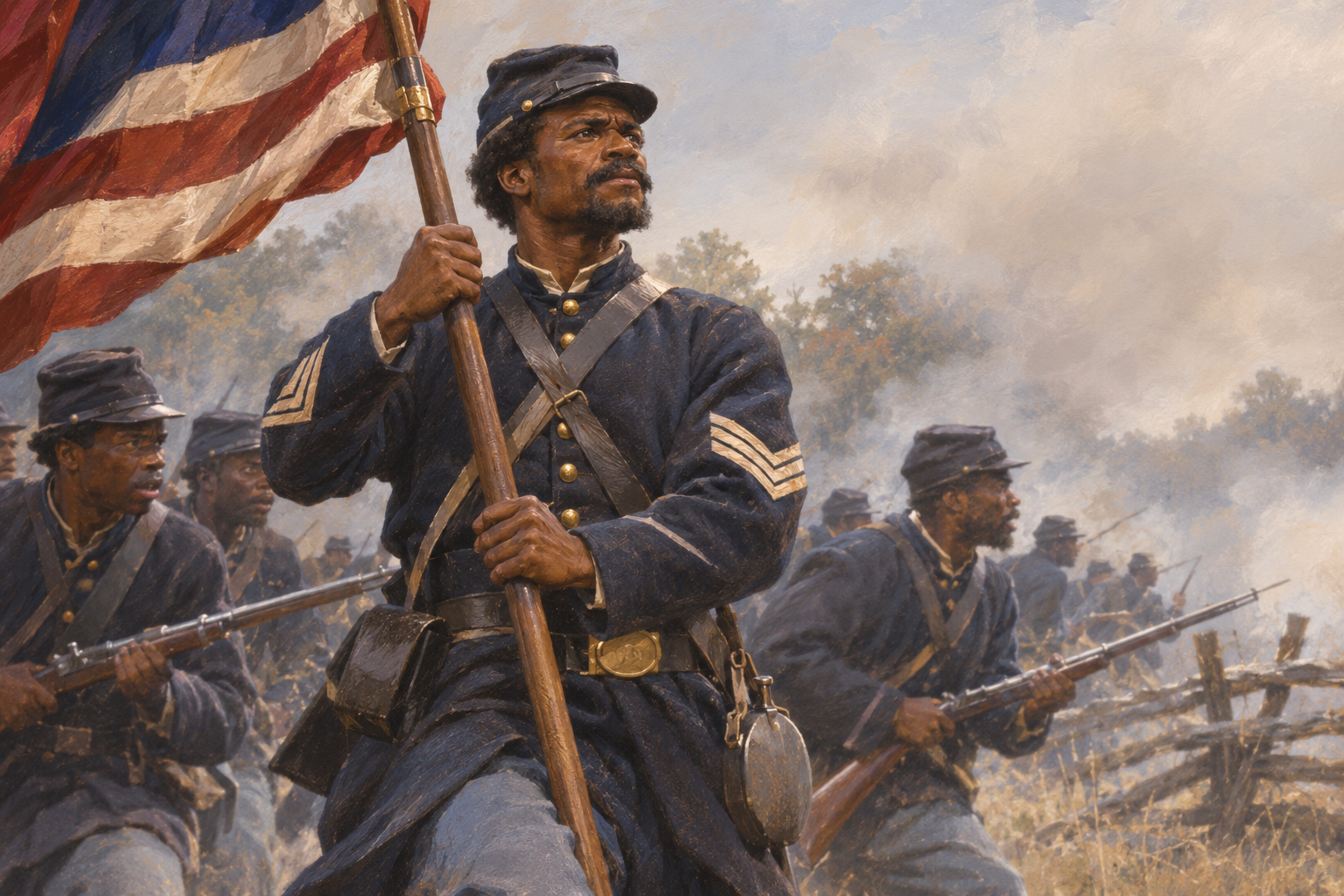
Editorial illustration honoring Christian Fleetwood and his Civil War service.
Generated editorial illustration for VHVATC’s history series. It is not an archival photograph or historical artifact.

A medal can make courage visible. It cannot, by itself, remove the barriers that decide who is trusted with command.

A Medal of Honor and a long public service

The official U.S. Army History account identifies Christian A. Fleetwood as born on July 21, 1840, in Baltimore, Maryland. He enlisted in the Fourth U.S. Colored Infantry in 1863 and earned the Medal of Honor for actions at the Battle of Chaffin’s Farm in September 1864.

He mustered out of the Union Army as a sergeant major in 1866 and settled in Washington, D.C. The medal recognized a moment of extraordinary courage; Fleetwood’s later life shows the continuing work of a veteran who still wanted to serve.

Service after the war

From 1880 to 1884, Fleetwood commanded an unofficial militia company known as the Washington Cadets. When the District’s National Guard was established in 1887, the company became part of its Sixth Battalion, and Fleetwood was commissioned a major in the District of Columbia National Guard.

The sequence matters. Fleetwood’s leadership was not confined to a battlefield memory. He built experience, trained people, and took on public responsibility in the years after emancipation.

The quest for command

In 1898, as the Spanish-American War approached, Fleetwood proposed forming a Black regiment and wrote to senior national leaders about his willingness to serve in command. The Army History article documents the racial discrimination he encountered and the resulting lack of opportunity to lead a regiment.

That tension gives the story its force. Fleetwood had already demonstrated courage and leadership, yet the question of who could command remained shaped by race. His record is therefore both an account of achievement and a map of the barriers that achievement did not erase.

THEN · NOW · JOIN

Honor the record. Make the next step clearer.

This history stands on its own. The present-day work also deserves clear evidence, plain language, and a defined invitation.

THENThe historical record

Fleetwood earned national military recognition, built a postwar leadership record, and still had to argue for the authority that his service suggested he deserved.

NOWVHVATC Today

VHVATC’s current public pages describe support and navigation for Veterans and their communities. This present-day work is described separately from the historical claim about Fleetwood’s career.

JOINA reader’s choice

Follow the Army History source, learn how recognition and access diverge, then connect with VHVATC through evidence, partnership, volunteer service, or support questions.

SEE THE WORK BEFORE YOU FUND THE MISSION

Evidence should come before the ask.

NEED

The historical need was not only to recognize battlefield courage but to make leadership opportunity accessible after service.

WHAT THE RECORD SHOWS

The Army History account documents Fleetwood’s Civil War service, Medal of Honor, militia command, and 1898 command proposal.

WHERE & WHEN

The record runs from Baltimore in 1840 to Civil War service, Washington, D.C., and the 1898 Spanish-American War period.

EVIDENCE AVAILABLE

The official Army History article is linked directly. Because it is OCR-processed, readers should consult the source PDF for context.

WHAT SUPPORT COULD MAKE POSSIBLE NEXT

VHVATC can keep pairing well-sourced history with plain-language current work and a defined next conversation.