
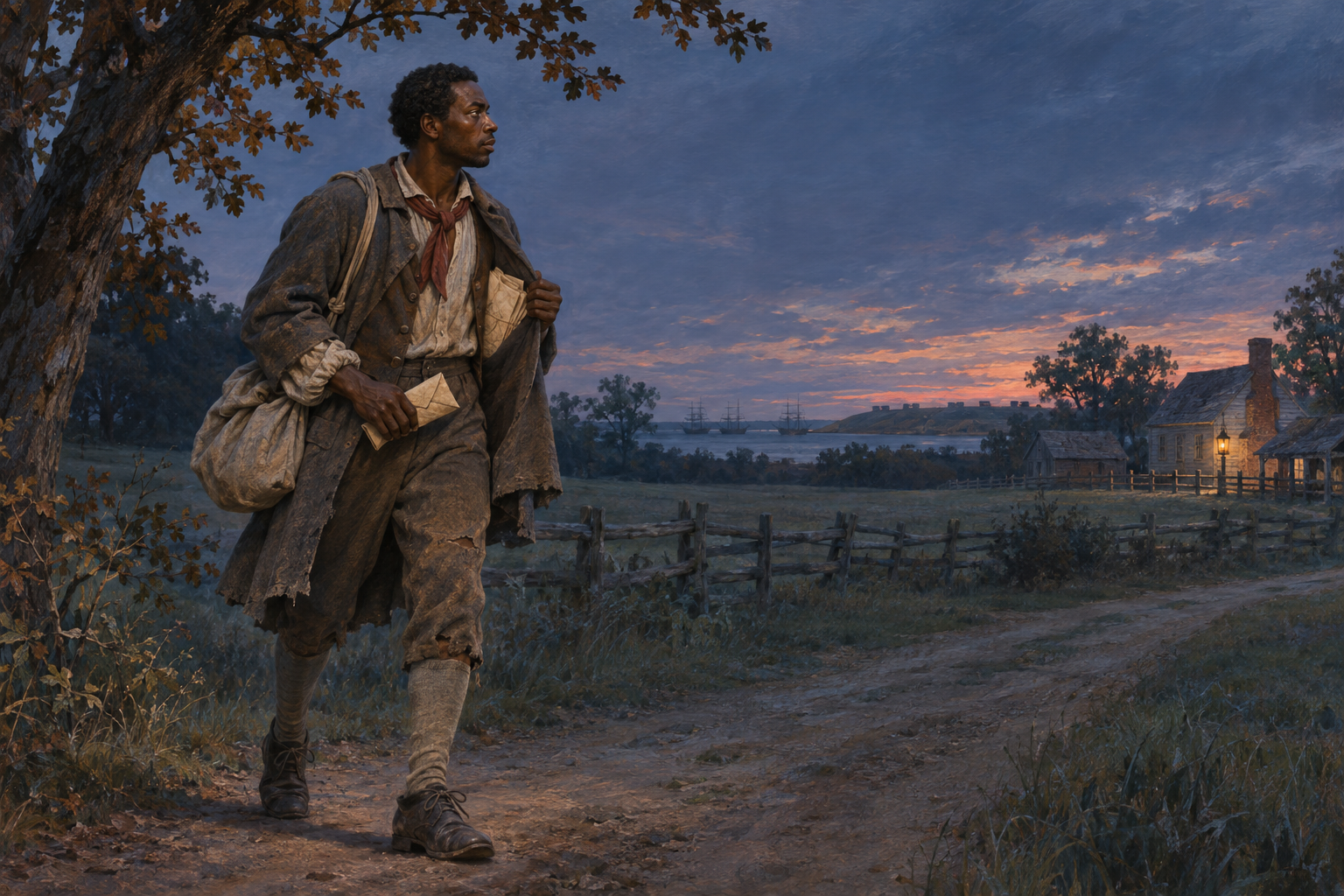
James Armistead Lafayette’s story is not only about espionage. It is about what happened when a person could help win a war and still be denied the freedom that military service was supposed to promise.
A spy whose freedom was not automatic
The National Museum of the United States Army identifies James Armistead Lafayette as a man born into slavery around 1748 on a plantation owned by William Armistead in New Kent County, Virginia. In 1781 he enlisted in the Continental Army with the understanding that he was not free and would return to slavery after the war.
That arrangement makes the story difficult to reduce to a simple tale of patriotic service. Armistead was asked to take risks for a cause that spoke the language of liberty while leaving his own legal status intact. The record holds both facts at once.
Intelligence inside British headquarters
Armistead served in the unit associated with the Marquis de Lafayette and worked as a double agent. Posing as a runaway slave, he successfully infiltrated British headquarters and reported information about troop movements from Portsmouth toward Yorktown.
The museum’s account connects that intelligence to the American and French victory at Yorktown on October 19, 1781. His contribution was not a decorative footnote. It was information gathered under conditions that could have cost him his life.
The war ended before the promise did
Armistead returned to slavery after the war. The Marquis de Lafayette intervened on his behalf, and the Virginia General Assembly granted him freedom in 1787. He later adopted the name Lafayette as a mark of gratitude.
Freedom did not end the work of seeking recognition. Armistead petitioned for a pension for his service and did not receive it until 1819. He and Lafayette were reunited in 1824. The timeline shows why service, freedom, and recognition belong in the same conversation: one did not automatically deliver the others.